Many talented girls leave sport between the ages of 14 and 19, just as they move from amateur to higher-level competition. At that stage they face more pressure, school and training demands, body changes and fewer female role models, while most coaches are trained in technique and tactics rather than in supporting an athlete through such a transition.
Mind and Motion responds by turning coaches into mentors. Partners from Serbia, Türkiye and Poland developed a Mentoring Competence Framework based on research with coaches and athletes, tested it with sports staff in a joint training and at local events, and translated it into a practical Playbook for everyday use in clubs.
Project Type: Erasmus+ Sport – Small-scale Partnership
Project #: 101246139
Date: December 2025. – February 2027.
Place: Niš (Serbia), Istanbul (Türkiye), Starogard Gdański and Gdańsk (Poland)
Participating countries: Serbia, Türkiye, Poland
Partners:
İstanbul Gençlik ve Spor İl Müdürlüğü – İGSİM, Istanbul Provincial Directorate of Youth and Sports (Türkiye)
Klub Sportowy Beniaminek 03 (Poland)
Mentoring in sport; career transition of young female athletes; gender-sensitive coaching; athlete wellbeing; competences of sports staff.
Coaches, trainers and other sports staff working with girls and young women, sports clubs, federations and coaching associations. The indirect beneficiaries are female athletes aged 14–19 transitioning from amateur to higher-level sport.
Equip sports staff with mentoring competences to support young female athletes through the transition to higher-level sport.
Develop, test and publish the Mentoring Competence Framework and the Mind & Motion Playbook.
Reduce drop-out of girls from sport by promoting gender-sensitive coaching and attention to wellbeing.
Encourage clubs, federations and policymakers in the three countries to integrate mentoring into their coaching practice.
Gender equality – Girls get fewer resources, less attention and fewer female role models than boys at the same level, and Mind and Motion treats this as a real cause of drop-out. Every activity and tool is designed around the needs of young women in sport.
Inclusion – The project reaches coaches and athletes from grassroots clubs and smaller communities, not only elite centres. Its materials are free, practical and available in four languages, so a club needs no special budget or expertise to use them.
Athlete wellbeing – We see performance and wellbeing as inseparable. The project encourages coaches to notice stress, burnout, body changes and menstrual health, and to treat these as part of training, not as private problems the athlete should handle alone.
Respect for athletes’ voice – Young female athletes helped create the project from the start. Their experiences of the transition shaped the content, and the mentoring approach asks coaches to listen to athletes and plan with them.
Cooperation – Partners from Serbia, Türkiye and Poland combine three perspectives: a sports-educational association, a public authority and a grassroots club. Together they show that supporting athletes is shared work between coaches, clubs, families and institutions.
Open access to knowledge – Everything the project produces stays free to use and adapt after the project ends. Any coach, club or federation can use it without restriction.
ACTIVITY 1: Development of the Mentoring Competence Framework and the Mind & Motion Playbook
Working from the research, EduSphera led the drafting of the Mentoring Competence Framework. It defines what a coach needs to know and do to act as a mentor, grouped into three areas:
- Providing Guidance
- Increasing Impact
- Enhancing Collaboration & Supportive Environments
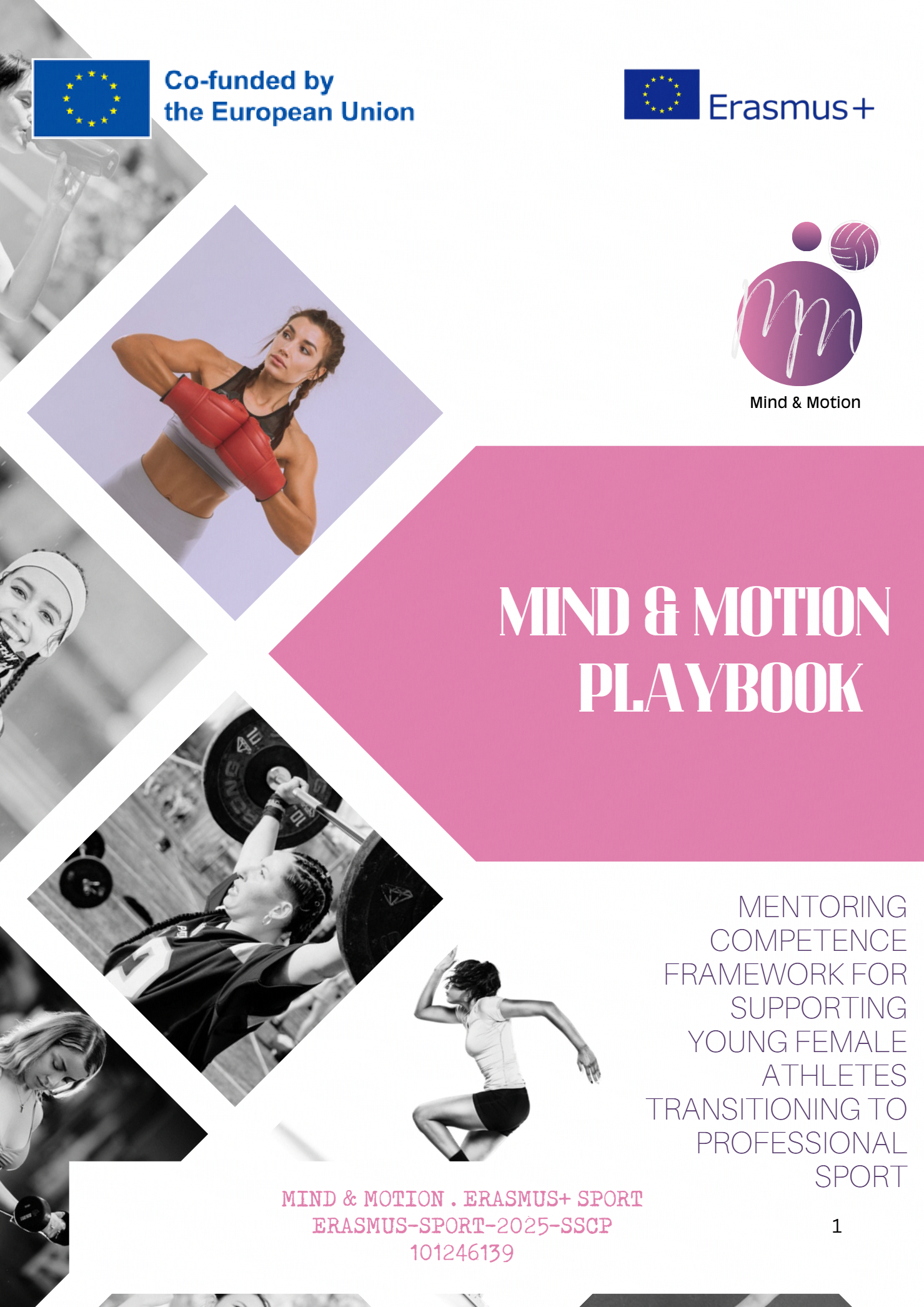
The framework was first turned into a training format for sports staff, and then into the Playbook: a practical guide with activities coaches can use in everyday training. Partners reviewed every draft. The material was then tested at the training in Niš and at local events, where coaches tried the activities and gave feedback through a short survey. Two EduSphera experts used this feedback to revise the framework and finalise the Playbook. The final version was translated into Serbian, Turkish and Polish for the open digital learning space.
ACTIVITY 2: Training for Sports Staff
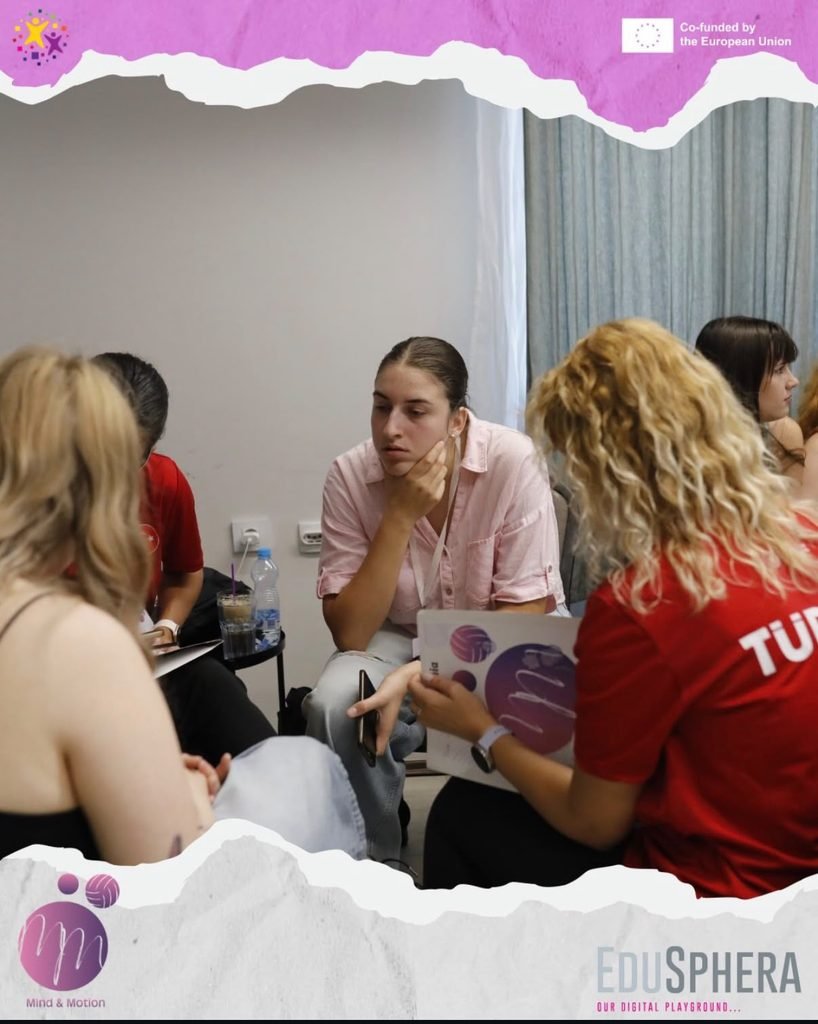
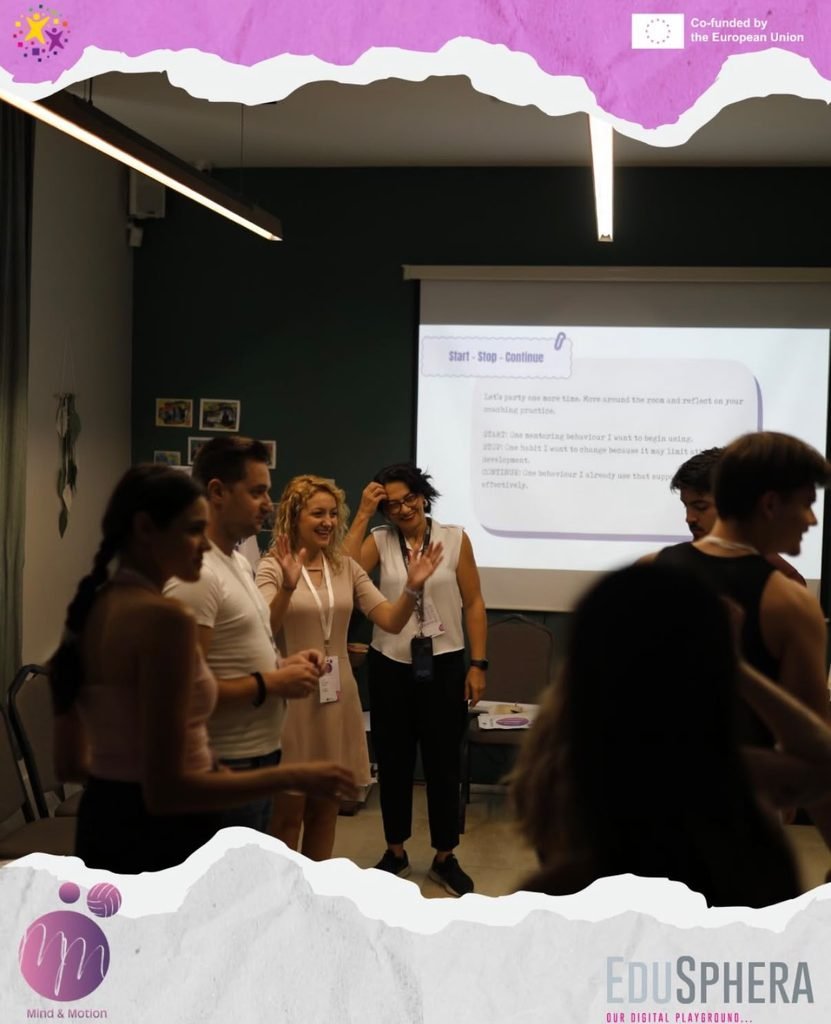
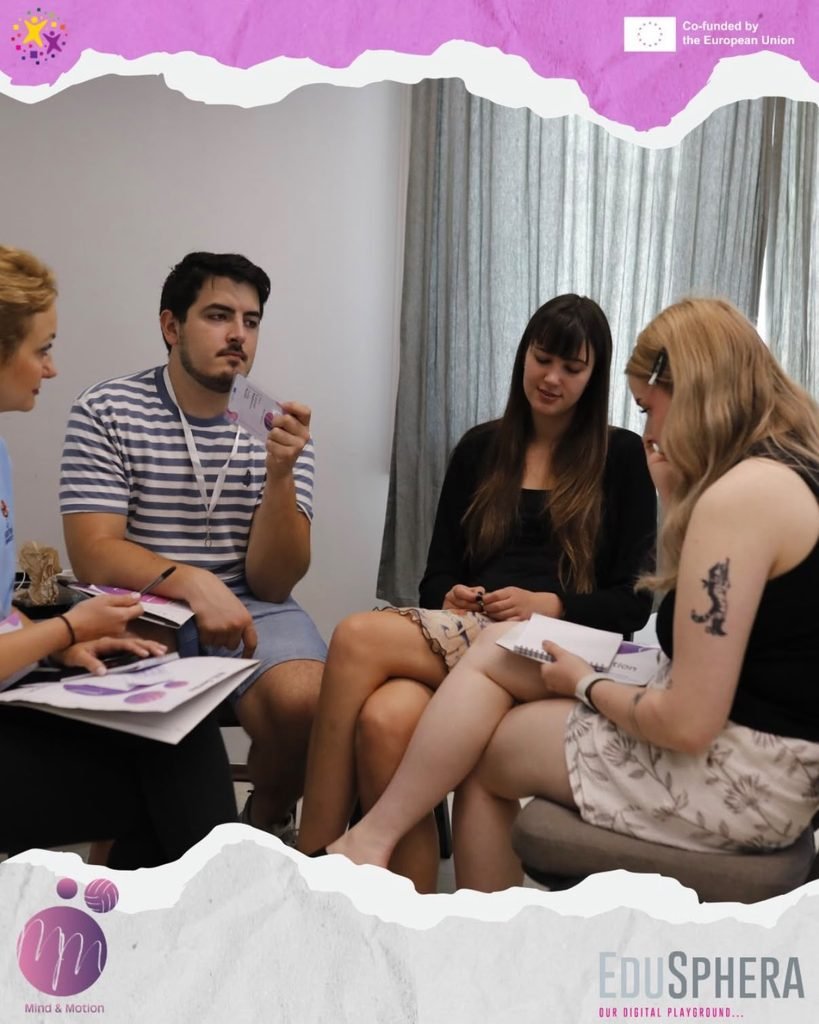
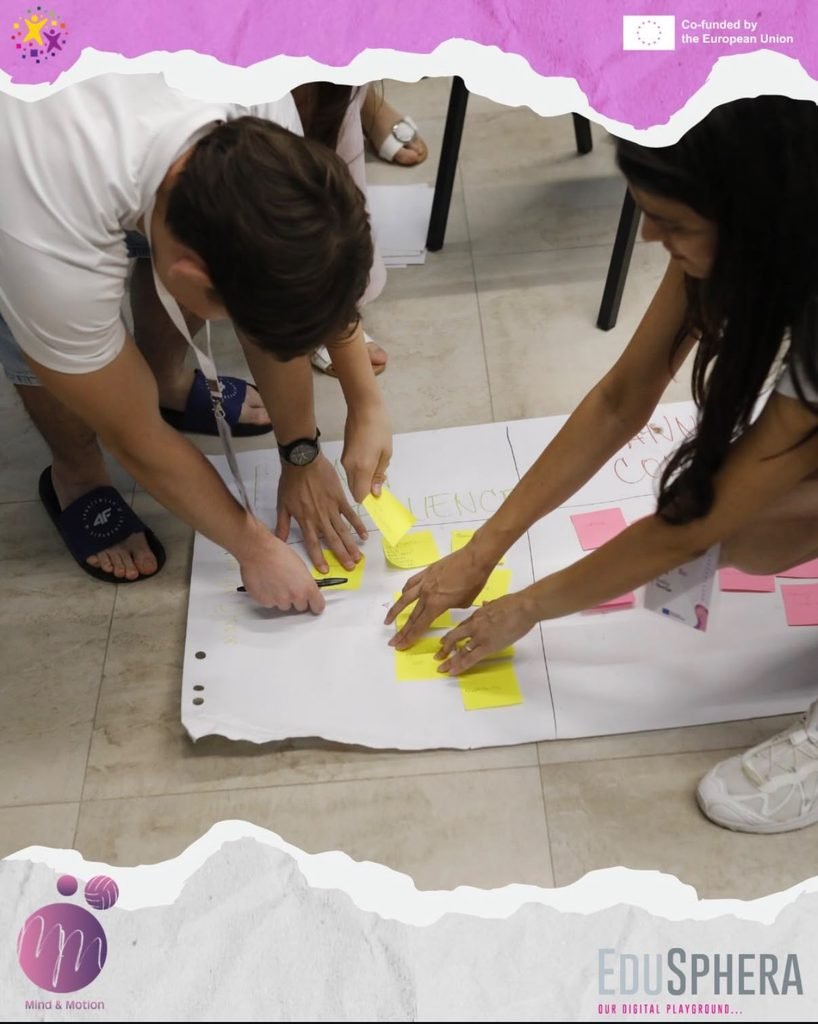
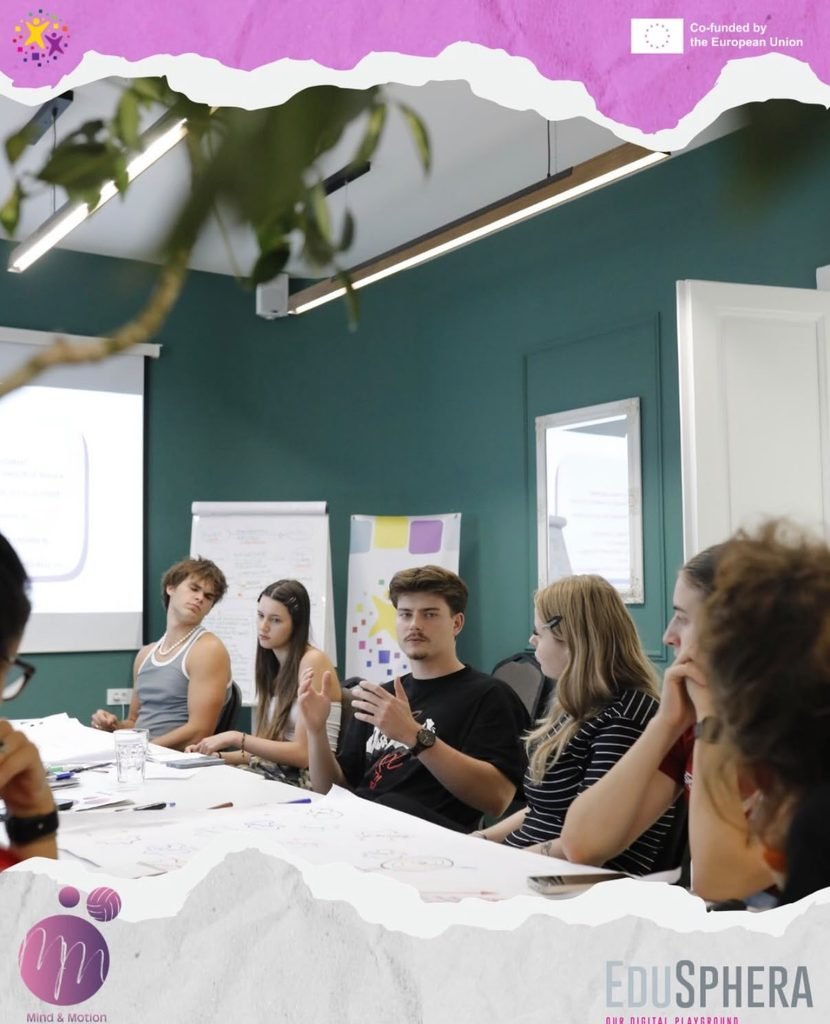
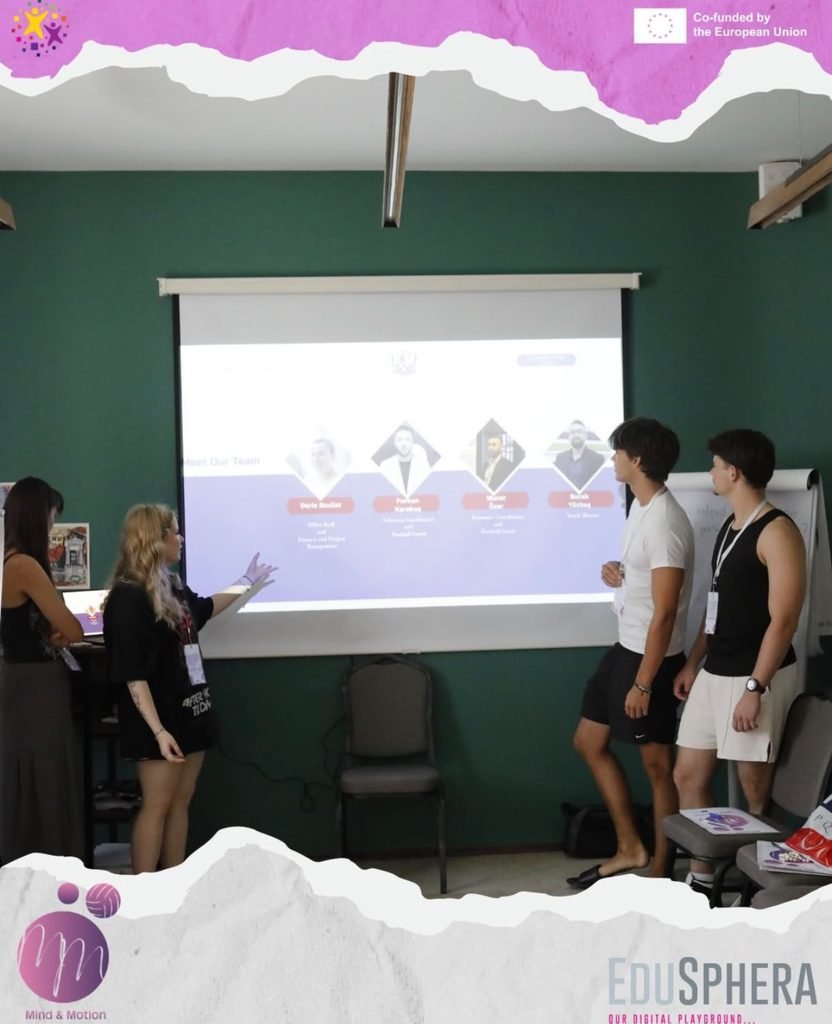
A 5-day training in Niš, hosted by EduSphera, for 15 coaches and trainers from the three partner countries. The programme followed the new training format. It combined input on the transition challenges young female athletes face with hands-on practice of the mentoring activities and with peer exchange on how clubs in each country work with girls. Participants were the first to test the draft Playbook, and their comments directly shaped the final version. After the training, they act as multipliers in their own clubs and local communities.
ACTIVITY 3: Multiplier and Dissemination Activities
To get the Playbook into real coaching practice, the partners worked on two levels.
Local workshops for practitioners: In Niš, Istanbul and Starogard Gdański, partners ran one-hour workshops for coaches and trainers, four per country with 25 participants each. At each one, participants tried a Playbook activity together, discussed how it would work in their club and gave feedback through a short survey. Different activities were used at different events, so the feedback covered the whole framework.
Online webinars for decision-makers: Partners ran three interactive webinars per country with 25 participants each, aimed at clubs, federations, coaching associations and policymakers. These presented the Playbook and the training format and discussed how mentoring could become part of coach education and club rules. An online campaign with ten digital materials on mentoring and gender-sensitive coaching ran across all three countries alongside the events. Together, the workshops and webinars reached about 525 people and opened contacts for using the framework after the project ends.
| Mind & Motion Playbook – A practical guide for coaches built around the Mentoring Competence Framework, with three competence areas: Providing Guidance, Increasing Impact, and Enhancing Collaboration & Supportive Environments. It includes around 40 ready-to-use activities, a gender-sensitive coaching checklist, guidance on wellbeing and menstrual health, a four-week mentoring plan and an individual athlete support plan. Training format – A tested programme for training sports staff in mentoring, which clubs and federations can reuse after the project. Open digital learning space – The Playbook and training materials are freely available online in English, Serbian, Turkish and Polish, together with ten digital outreach materials on mentoring and gender-sensitive coaching. Stronger coaching practice – Several hundred coaches and stakeholders in Serbia, Türkiye and Poland have taken part in the training, workshops and webinars, and the partners have built links with clubs and federations for continued use of the framework. |